A Man Who Inspired Music Lovers – 90 Years Since the Birth of Ivalo Randalu
7 Feb 2026
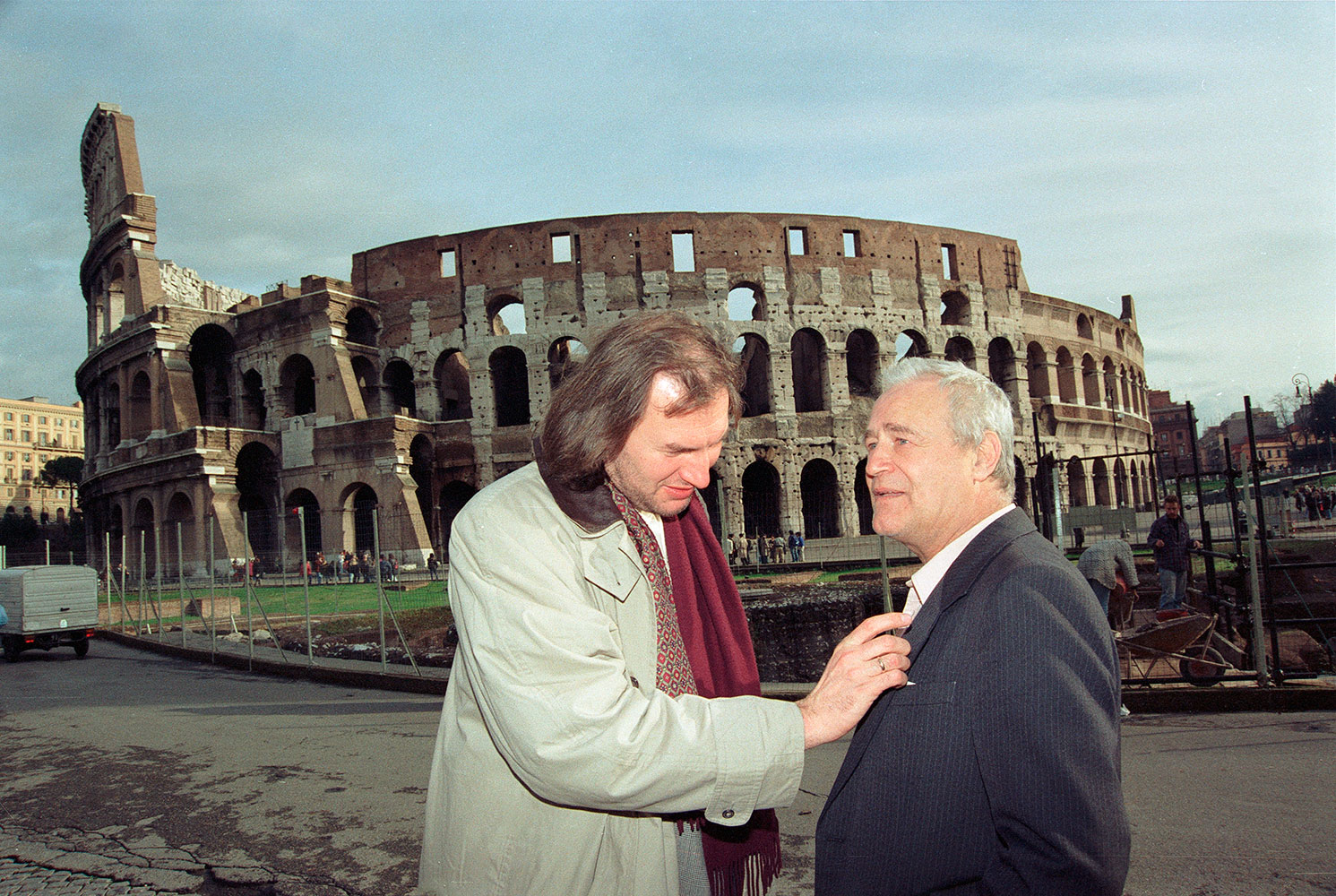
On 7 February, 90 years will have passed since the birth of Ivalo Randalu. A man with Latvian and perhaps also Livonian roots, he inscribed himself into Estonian music history as a luminous propagandist—one who popularised music and brought it closer to people.
Following the list of deeds with one’s finger, it might seem that Ivalo Randalu’s footprint in music journalism was not particularly large or extensive in terms of sheer volume or weight of content. Yet his actions contained an abundant measure of passion and emotional intensity that strongly affected listeners.
In the second half of the 1950s, Randalu was a student of Veljo Tormis at the Tallinn Music School, and in the 1960s he was the author of several important radio programmes at Estonian Radio introducing Tormis’s music. He later wrote and spoke about Tormis’s music repeatedly.
Veljo Tormis was a teacher at the Tallinn Music School immediately after completing his studies in Moscow. In addition to daytime lectures, he founded a creative circle for the more alert students, which met after classes. Ivalo Randalu was one of those who received impulses there—as was Arvo Pärt, with whom he later studied under Heino Eller at the conservatory.
In the 1960s, the Ernesaks Male Choir performed Randalu’s works, as did several others. He wrote music for films and even tried his hand at acting a little himself. For years he produced radio programmes. There he introduced newer-sounding music, insofar as that was possible under the conditions of the time. With a microphone, he was always drawn to places where there were people—reportage and live broadcasting were Ivalo Randalu’s element. In old recordings one can clearly hear how the radio man enjoyed interacting with people, whether it was the self-assured cloakroom attendant of the opera house in front of the microphone or the already controversial Arvo Pärt, who “never gave interviews.”
In the 1970s Randalu worked in television, and in the 1980s–1990s at the Theatre and Music Museum, rummaging among archive shelves through the fragments of local music history.
He wrote a few books and a very large number of articles, including several dozen related to the music of Veljo Tormis.
At the end of 1995, Ivalo took part as a journalist in the Estonian Philharmonic Chamber Choir’s trip to Italy and wrote a series of articles about it for Sõnumileht. On 14 December, the choir sang for the first time in Rome’s Church of St Ignatius of Loyola (Chiesa di Sant’Ignazio di Loyola), and before that concert Tõnu Tormis also took that photograph of Tõnu Kaljuste, Ivalo Randalu, and one of Rome’s symbolic structures.
There are places like this that exist as only one for millions—Rome. Here heaven and earth truly meet, and it does not matter whether you are a pagan or a Christian, which god you have chosen or which one has chosen you. And yet truths, too, are only one, though for each person it is their own.
Another excerpt from Ivalo Randalu’s article “On Heavenly Ground” (Sõnumileht, 23 December 1995):
“/…/ more than Bach and other universally demanded treasures of the Western canon, it has been Pärt and Tormis who, since the previous decade, have been performed everywhere and thus made known. If Pärt might have entered the world’s sphere of interest with his vocal music even without Kaljuste’s choir, then it was primarily that choir which carried Tormis’s work beyond the border of Eastern and Central Europe.”
A fellow student from youth, Priit Kuusk, said in his obituary for Ivalo Randalu in 2019: “He became someone who noticed important things in Estonian music and fought for them.”
It was a friendly struggle, without any violence. No waving of fists or warlike slogans—always a warmly and smilingly conveyed urgent invitation to music.